Bringing CranioSacral Therapy to the concussion conversation.
Concussion rehabilitation is moving forward. But gaps remain, both early on and when long term issues won't resolve. Here is where CranioSacral Therapy can help, alongside what you're already doing.
What's happening in concussion recovery today
Cervicovestibular Physiotherapy, specifically treating the neck, balance systems and soft tissues, after a concussion, is an approach pioneered by Dr Kathryn Schneider, in Alberta. Studies showed that it helped 73% of athletes achieve medical clearance to return to sport within 8 weeks, versus 7% with rest alone.
Getting back to a level of exercise that doesn't increase symptoms ('sub-symptom threshold aerobic exercise'), as soon as possible, now has two 2024 RCTs (randomised controlled trials) behind it confirming clinically meaningful improvement in symptom burden, including in adults with persistent post-concussive symptoms (PCS).
Clinics such as the Institute of Sport, Exercise and Health in London and Hobbs Rehabilitation in Hampshire are delivering multidisciplinary care that includes: vestibular assessment, oculomotor work, neuropsychological support, and graduated return to activity. This is far better than "rest and wait."
The Concussion Toolkit is bringing gender-informed, holistic protocol thinking to sports organisations. The Drake Foundation is funding the epidemiology and biomarker research the field needs. HeadX is putting precision cervical proprioceptive retraining into clinical hands. These are just some of the things happening - all moves in the right direction. Research in this field has increased a lot in the last 20 years and the field as a whole is continuing to build its evidence base. Although it's interesting that:
"The 2022 Cochrane overview found that only 3% of TBI rehabilitation evidence is rated high quality."
Cochrane Overview of TBI Rehabilitation Reviews, 2022 (PMC9147293)There's a variety of reasons for this which are not for discussion here, but which highlights the need for ongoing exploration of what does work for those who are struggling. We are currently working on adding to the evidence base but here's what we feel CST can add to the field and why.
Six aspects of post-concussion recovery that current frameworks are not always reaching.
This isn't a criticism of what is being done, it's more a description of what else might be possible and how it could help more people.
Structure is rarely checked before rehabilitation begins
UK rehabilitation tends to run in a sequence: rest, then vestibular rehab, then graduated aerobic exercise, then return to sport. What rarely happens first is a look at the structure itself. Restriction at the upper cervical spine, cranial base and dural membrane system can alter neurology, blood supply, venous return and cerebrospinal fluid flow in the brain, which might be prolonging symptoms that appear to have no cause on a standard scan.
Cervical dysfunction persists
Two 2024 peer-reviewed studies found cervical proprioceptive deficits still present at six months, even where symptom scores had largely settled. Abnormal input from upper cervical and trigeminal afferents is a documented mechanism for post-concussion headache and dizziness. It also means that if someone takes a second knock, or another trauma of some kind, the response may well be worse and last longer. Retraining assists the feedback loop, though the tissue producing that signal is not usually what gets treated.
Autonomic dysregulation is measured, but rarely handled directly
A 2024 literature review in Neurology analysing 22 studies found consistently decreased heart rate variability (HRV) in concussed individuals, suggesting it's a useful marker of autonomic dysregulation that may show up even when there has been some symptom resolution.
The current standard response is sub-symptom aerobic exercise (the Buffalo Protocol). This is valuable, but doesn't address the autonomic nervous system's dysregulation directly. The 2025 vagus nerve stimulation data suggests that working with it directly produces meaningful symptom reduction, including in people who have been symptomatic for years.
The emotional load sits below what CBT is designed to reach
There is often an emotional component to a concussion, from the incident itself and from everything that has happened since. CBT is well evidenced for the mood disruption of PCS. What it may not reach is what stays held below conscious thought: the shock of the impact, the disruption to someone's sense of self, safety and physical competence. A 2026 paper in Frontiers in Neuroscience sets out the pathophysiology that comorbid mTBI and PTSD share, none of which cognitive therapies are designed to address at tissue level.
Past twelve months, the evidence thins out for everyone
The aerobic exercise RCTs, the cervicovestibular physiotherapy RCT, the vestibular systematic reviews: all of it comes from acute and sub-acute populations. A 2024 systematic review in Neuropsychological Rehabilitation found limited evidence even for psychological interventions past twelve months, and the DCMS Select Committee found the NHS "not properly equipped" for this group. Even the best private provision is built around athletes in the weeks after injury, rather than people who have been living with this for years.
Specialist care exists, but not where most people live
There are definitely more clinicians working in this area and study being done now. The Institute of Sport, Exercise and Health in London, and Hobbs Rehabilitation in Hampshire and Bristol, represent excellent care. They are also fee-paying, and concentrated in the south of England. The 2023 UK Delphi consensus statement named limited availability of NHS specialist services as a central barrier to joined-up care. Outside the major cities the real choice is often a long wait for a referral to nowhere useful, or nothing at all.
CranioSacral Therapy: how it's different & what this adds to other approaches
Developed by Dr John Upledger, following clinical research at Michigan State University in the 1970s, CST works with the whole body, but also specifically targets the craniosacral system: the membranes and cerebrospinal fluid that surround the brain and spinal cord. This is why it has a profound effect on the nervous system.
To understand how CST works we need to appreciate the extent to which the body is a self correcting system. Having already been capable of generating and organising growth since the meeting of the egg and the sperm (just think about all that it's achieved), it has a quite extraordinary ability to self regulate, grow, repair and often continue to function despite numerous insults and injuries that it may be compensating around.
The light touch that we use offers a support to this inbuilt mechanism for correction and healing, rather than imposing a fix to a problem. We say that we 'listen and follow', supporting what the body, in its aforementioned wisdom, knows it needs to do (and would have done by itself if it had had enough resource). What this means is that, with a solid anatomical understanding, we can be very precise with what and where we are treating, while following what the tissue knows it needs.
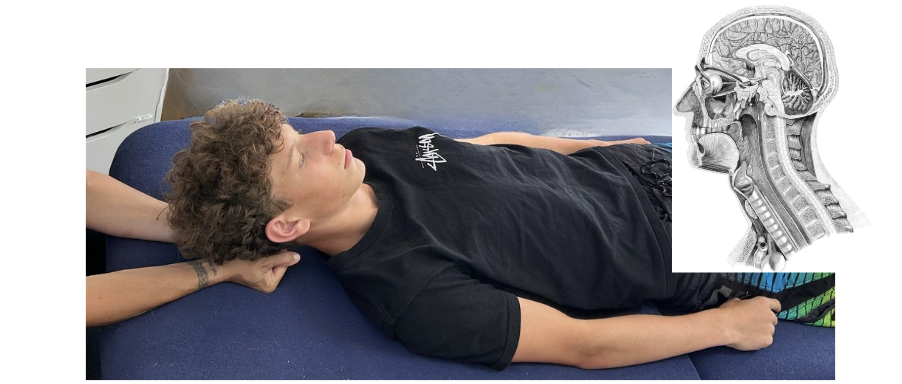
What CST offers your patients that current pathways don't.
Want to make a Referral?
CST can be done alongside other approaches, as well as independently. We're not asking you to stop what you're doing, but to consider whether there is more for a patient's recovery that you think we might be able to do.
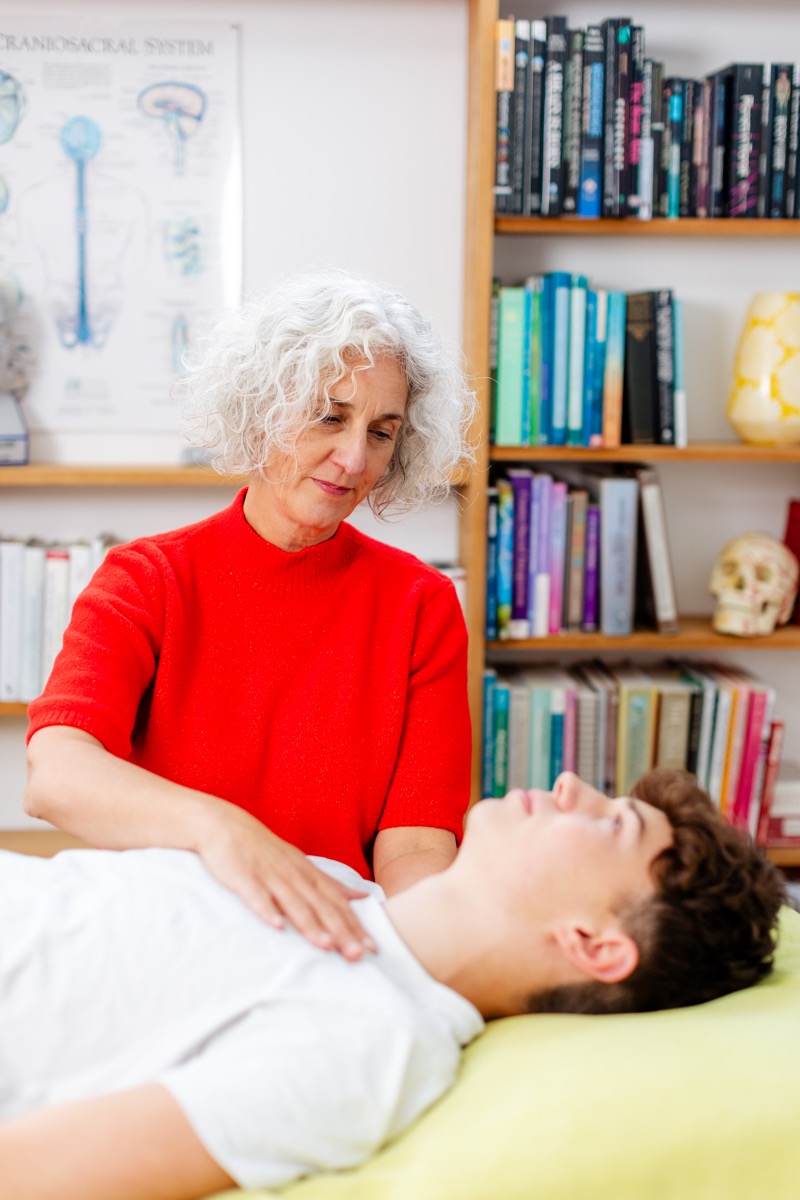
A referral to a Upledger-trained CST practitioner for a patient with PCS would typically begin with a full case history and craniosacral assessment - evaluating the quality and symmetry of the craniosacral rhythm, the mobility of the dural tube, the range and quality of movement in the upper cervical region, and the structural relationship between the cranium and sacrum.
Treatment is conducted with the patient clothed, lying on a treatment table. Sessions are 45–60 minutes. The touch is very light, working with the body's inherent self-correcting mechanisms rather than imposing adjustment. Patients frequently report changes during and after the session: a sense of deep release, shifts in symptoms, emotional processing, or significant changes to their sleep pattern.
For patients with significant or longstanding PCS, a multi-day, multi-practitioner, CST intensive programme (as in the 2017 study) will be taking place in November 2026 in Brighton, UK. This jumpstarts and intensifies the benefit from treatment and allows the body and nervous system to undergo more sustained recalibration than weekly sessions allow.
More about the Intensive Programme here →
Or find a practitioner at the link below.
What to tell your patient
- → It is gentle, no manipulations, or force
- → Sessions are 45–60 minutes, clothed
- → It complements, not replaces, their existing care
- → Practitioners trained to Diplomate level (CST-D) have the highest Upledger certification
What to look for in a practitioner
- → Upledger Institute trained (SER1 as minimum; CST-D for complex cases)
- → Experience with brain and concussion class curriculum
- → Willingness to communicate with the rest of the treating team
- → Use the Cranio Sacral Society's practitioner finder: craniosacralsociety.co.uk/find-a-therapist. Or call the office.
Or bring this into your own practice.
Many of our practitioners are physiotherapists, osteopaths, chiropractors, sports therapists - and yes, occasionally doctors, dentists, and surgeons. CST is something you can train in alongside your existing qualification and add as an additional layer of what you offer clients.
If you've read this far and found yourself thinking "I wish I could do this" - or if you simply don't have a CST practitioner near enough to refer to, and you have patients who would benefit - that thought is worth following. The training is structured in levels, so you can start with a foundation course and see how it sits before committing further.
What tends to happen is that practitioners who train in CST find it changes not just what they can offer - but how they work. The capacity to listen to the body at this level of precision has a way of informing everything else.
Training is delivered through the Upledger Institute UK, the only place in the UK where CST is taught to Upledger Diplomate standard.
Passionate and committed practitioners who have repeatedly seen what CST can bring to their clients.
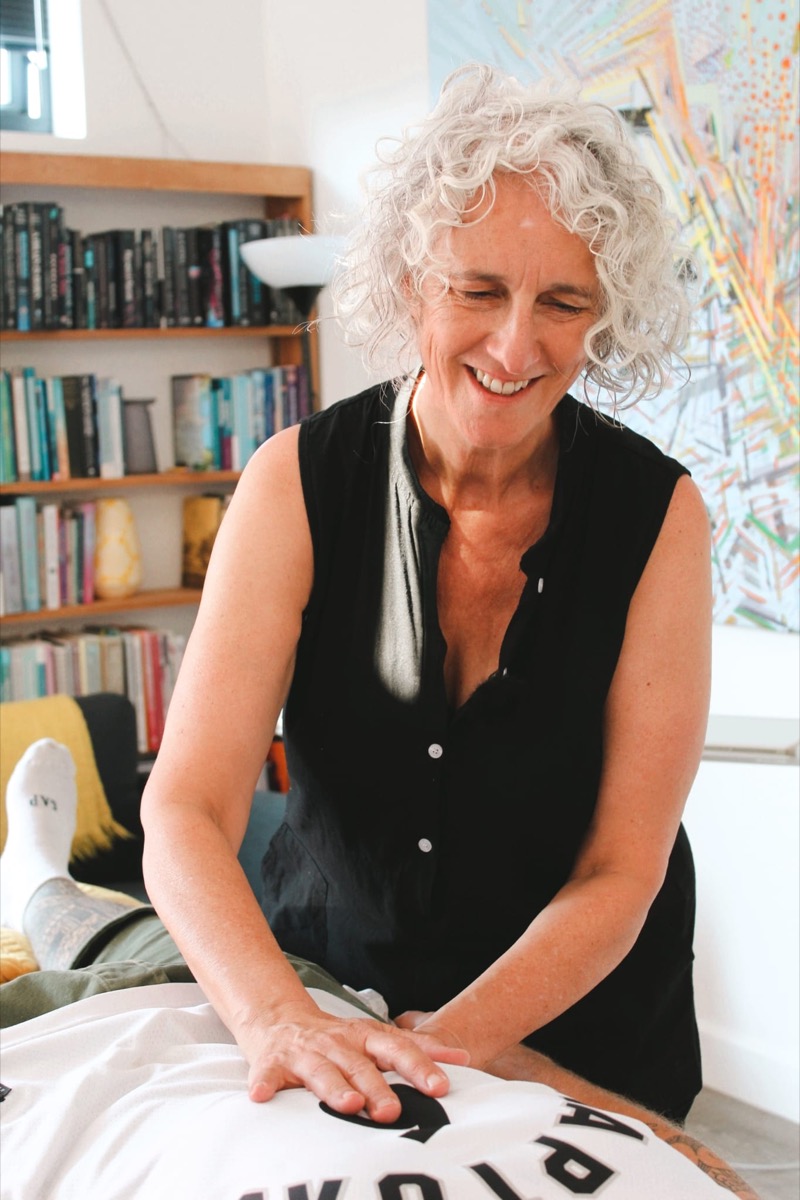
When the Upledger Institute started in 1985 it was because more and more people wanted to know about, and learn, what Dr John Upledger was doing because his clients were getting such extraordinary results. Many of these are documented in the books he wrote, and those that others have written too. As the institute grew, so did the range of the work, and even though Dr Upledger is no longer with us in person, a range of instructors continue to teach and develop the work into new fields. Concussion is one of the latest of these, because of how it can help. Being therapists rather than PR people we have tended to stay a little under the radar. We think it is time to change that.
We are not claiming CST cures post-concussion syndrome. We are making the case, from 40 years of clinical experience and published evidence, that there is a dimension of post-concussion recovery that current rehabilitation frameworks don't yet address, and that CST belongs in the conversation about how to close that gap.
We are currently running a case study series, collecting outcome data on athletes with persistent PCS, using validated instruments (RPQ, PHQ-9, GAD-7, HIT-6, PSQI, MFIS, DHI, QOLIBRI-OS), in alignment with published research standards, with the intention of contributing further to the peer-reviewed literature. If you are involved in concussion research and this is of interest, we would welcome a conversation to see where we can take it.
I want to refer clients to a CST practitioner.
Use the Cranio Sacral Society's practitioner finder. Practitioners with a 🧠 next to their name have completed specialist brain or concussion courses. If you can't find anyone near enough and have several patients who'd benefit, get in touch - we may be able to come to your clinic.
Find a practitioner →I want to find out about training and becoming a CST practitioner myself.
The Upledger Institute UK is the only place in the UK where CST is taught to Diplomate standard. Training is structured in levels - you can start with a foundation course and build from there.
Find out about training →